MATSUKAWA ONSEN — The Springs
Only 0.061 g of minerals per kilogram of water.
Yet more than ten times the sulfur needed to be called a sulfur spring.
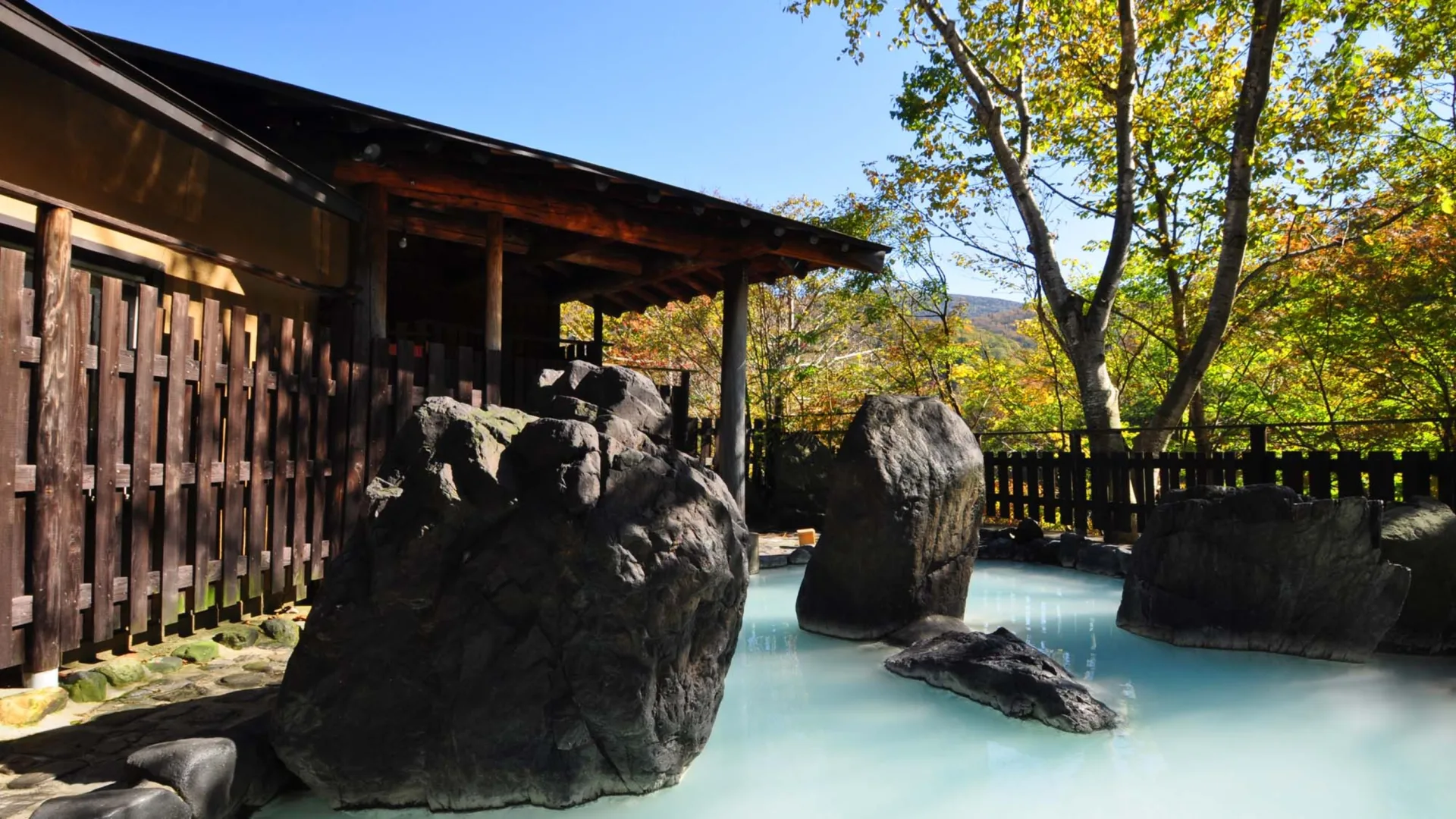
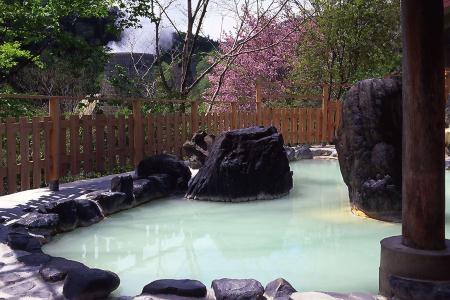
When it emerges, the water is clear.
Once it falls from the spout and meets the air, it slowly begins to cloud,
and over time it turns a milky white with a hint of green.
The color is fine particles of sulfur, formed as the dissolved hydrogen sulfide reacts with the air.
The Matsukawa Onsen gorge is also where geothermal power generation began in Japan.
Water warmed by that same heat underground flows from the source into our baths.
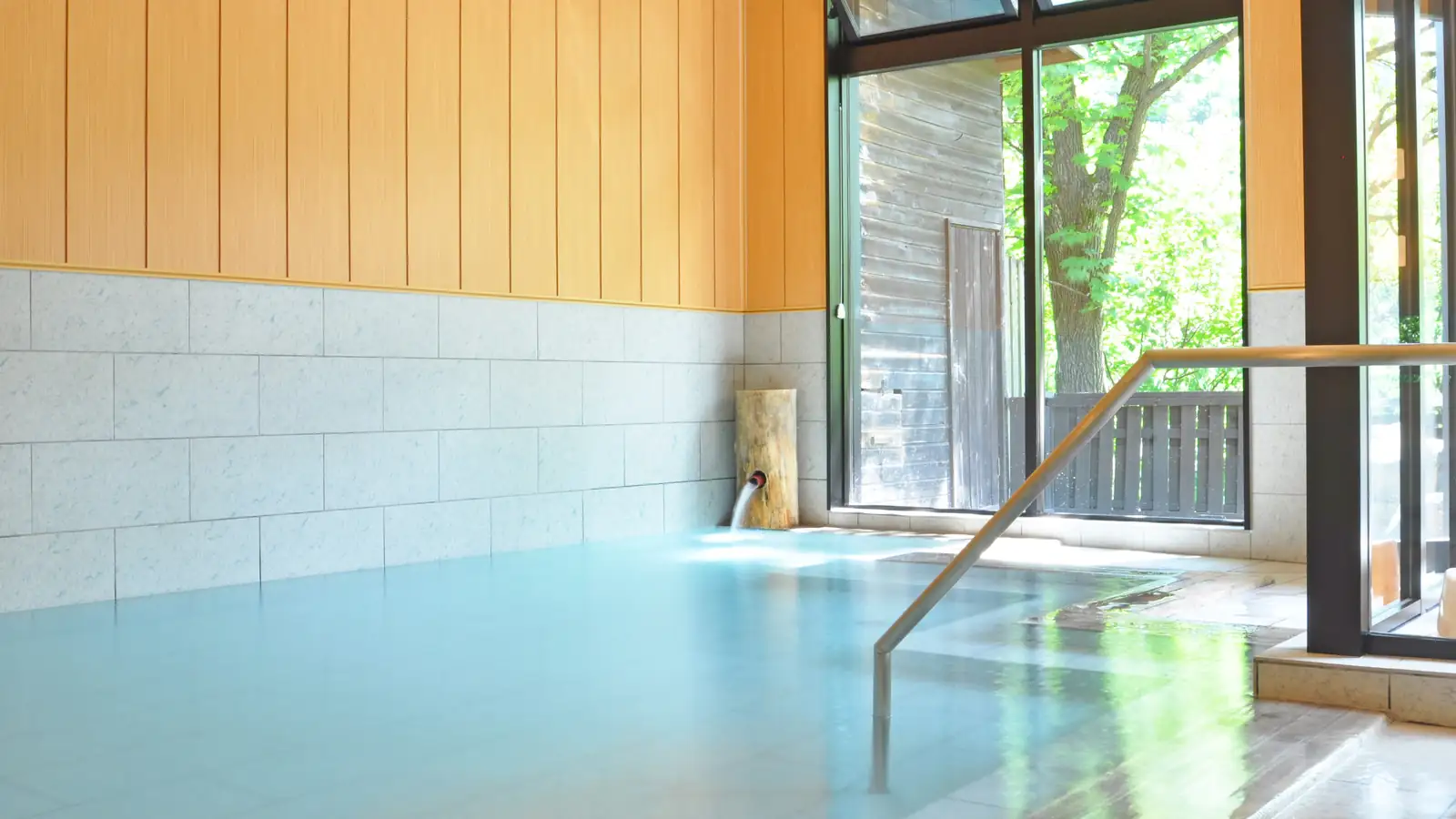
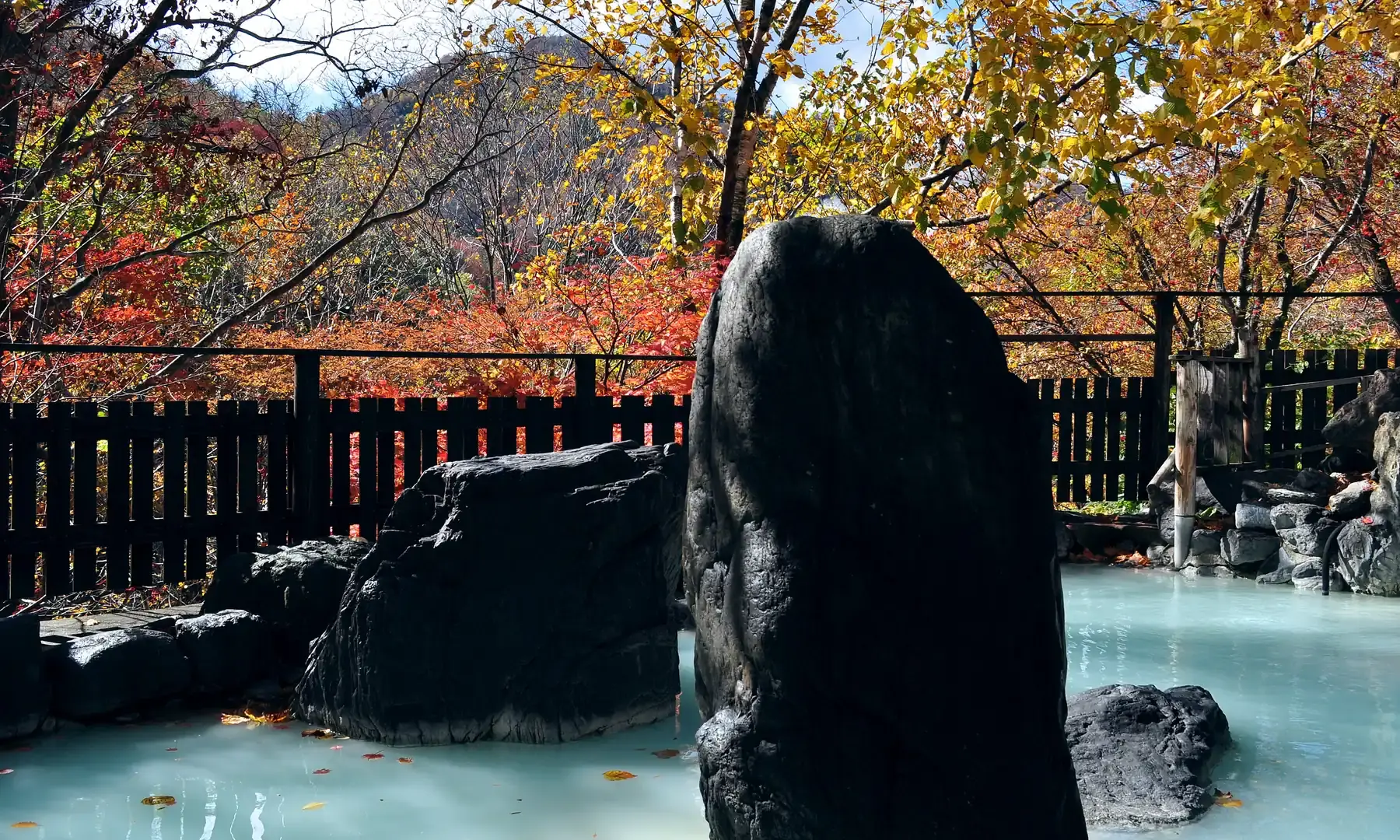
Our baths are fed by a spring on the grounds: a simple sulfur spring (hydrogen-sulfide type). Because the water emerges at 54.7–67.4°C, we add water to bring it down to bathing temperature before it reaches the bath. The water is not reheated, recirculated or chlorinated. The ranges in these figures are simply the natural variation of water that rises from the ground on its own.
Reading the name of the spring
Simple sulfur spring (hydrogen-sulfide type)
Hypotonic · Weakly acidic · High-temperature
Formerly classified as a simple hydrogen-sulfide spring
Hydrogen sulfide corrodes metal. Silver tarnishes black; pipes and machinery do not last. It is why the electrical and plumbing fixtures throughout the inn are kept to a minimum, and why we cannot install a boiler. So there are no showers in the baths.
Instead, along the washing area runs a trough (toi) filled with hot-spring water. You scoop it with a pail, pour it over yourself before getting in, and rinse with it afterwards. The water you wash with is the same water that comes out of the ground.
It is, admittedly, less convenient. But each time you lift a pail the smell of sulfur rises, and you feel the strength of the water in your hands. A shower tap would tell you nothing of this. The trough is where you first get to know the water.
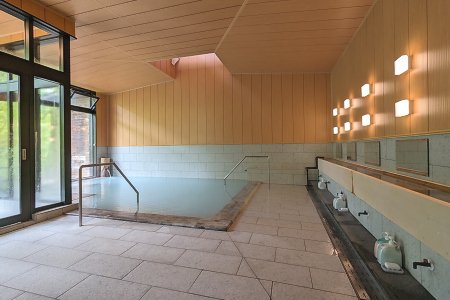
As far as the spring analysis and the official classifications allow us to say.
Among hot springs under Japanese law, only those with a prescribed amount of a medically useful constituent are called therapeutic springs and may list indications. Ours clears the total-sulfur threshold of 2 mg per kilogram more than ten times over.
Dissolved solids: 0.061 g per kilogram. Free carbon dioxide: 127–399 mg. Free hydrogen sulfide: around 25 mg. This water is, above all, gas. Gases pass through the skin into the capillaries; as the body works to expel them the vessels widen, circulation improves, and the warmth is said to last longer after you get out.
Rain and snowmelt soak into the ground, are heated by the volcanic heat beneath Hachimantai, and rise again as a volcanic hot spring. Japan’s first geothermal power station was built in the Matsukawa Onsen gorge because that heat is so abundant. The water in the bath and the steam from the plant come from the same ground.
Among sulfur springs, only the hydrogen-sulfide type turns milky white and smells of eggs. The color and the smell are what most people picture when they think of an onsen. The clear water from the spout slowly turning white in the air is the hydrogen sulfide at work.
The indications on the analysis include chronic muscle and joint pain and stiffness, and recovery from fatigue. The trailheads for Mt. Mitsuishi and Mt. Genta are a five-minute walk from the inn. This is also water for a body that has walked down off the mountain. Mountains and nature →
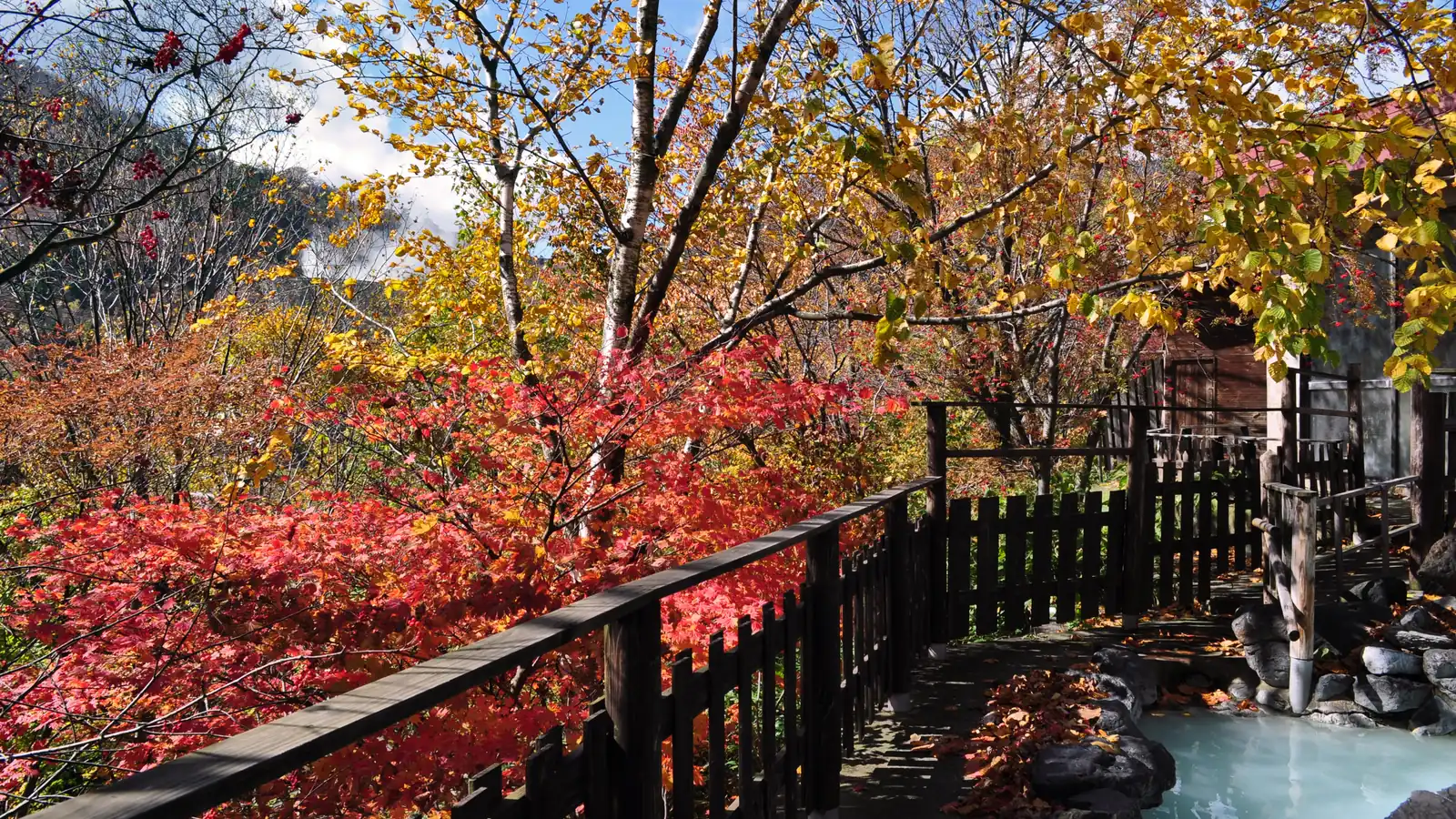
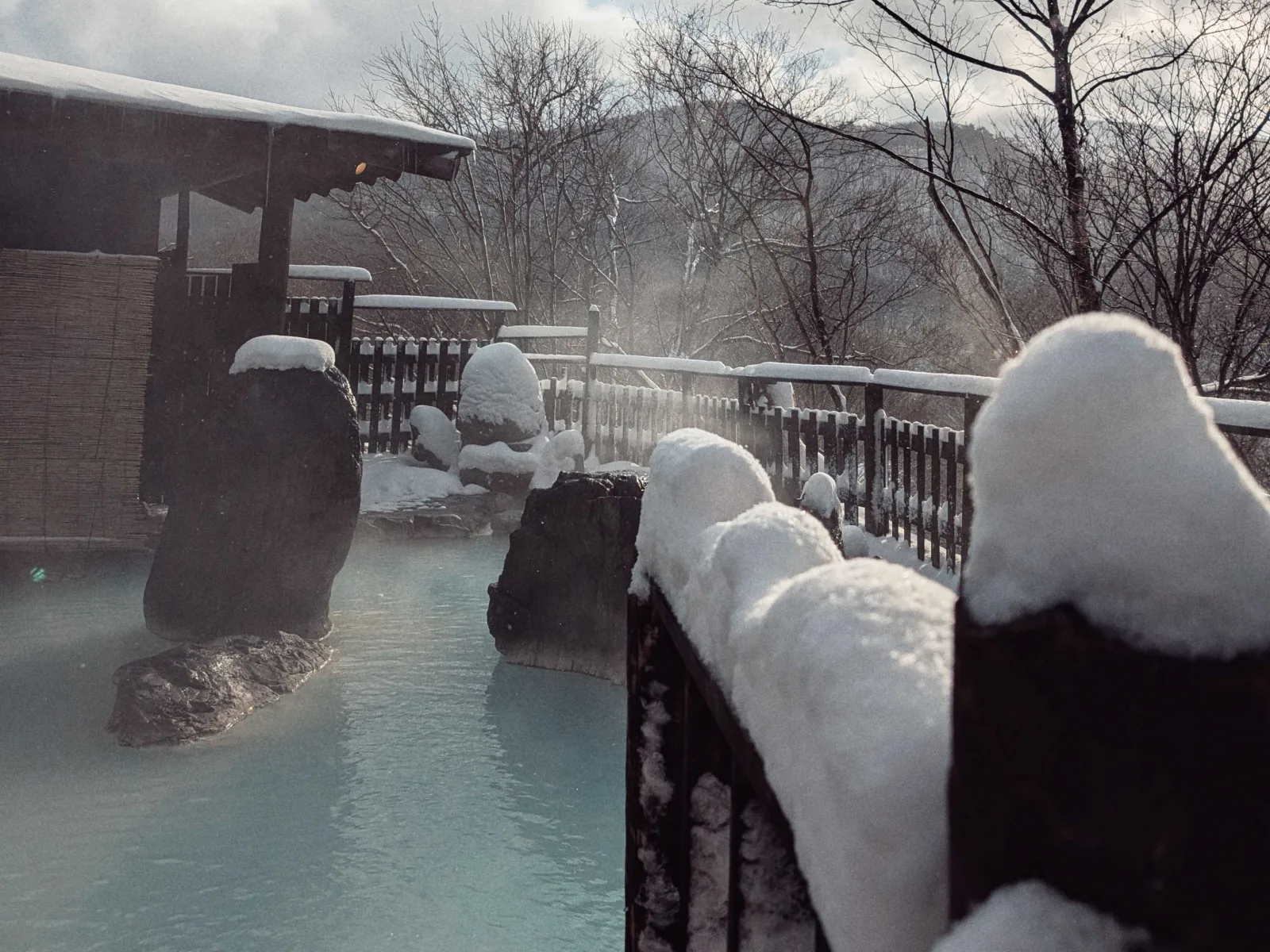
Day-use prices and closure days: Day-use onsen guide →
A simple sulfur spring (hydrogen-sulfide type), classified as hypotonic, weakly acidic and high-temperature (formerly called a simple hydrogen-sulfide spring). The source temperature is 54.7–67.4°C and the water is pH 5.0〜5.4. The water is colorless when it emerges and turns milky white on contact with the air.
Yes, the water flows directly from the source (kakenagashi). Because the springs are hot at the source (54.7–67.4°C), water is added to adjust the temperature. The water is not reheated, recirculated or chlorinated, and this dilution is the only treatment listed on the official spring analysis posted at the baths.
The sulfur in the water is strong enough that we cannot install a boiler. Hydrogen sulfide corrodes metal, which is also why the electrical and plumbing fixtures throughout the inn are kept to a minimum. Instead, the washing area has a trough (toi) filled with hot-spring water: scoop it with a pail to rinse yourself before and after bathing. Rinse-in shampoo, body soap and bar soap are provided.
There are two open-air baths: one mixed and one for women only. The indoor baths are separate for men and women, so women can use both the indoor bath and the women-only open-air bath. To avoid any trouble, we ask that smartphones and cameras be left at the front desk along with valuables.
Overnight guests can bathe 24 hours a day. Day-use bathing is 8:30 AM–7:00 PM (last entry 6:00 PM). Day-use prices and closure days are on the day-use page (https://kyounso.jp/en/higaeri).
Yes. Guests with tattoos are welcome to use all of our onsen, and there is no need to cover them with stickers or patches.
The spring analysis advises that elderly people, those with high blood pressure or heart disease, and anyone who has had a stroke avoid baths hotter than 42°C; that people with reduced heart or lung function prefer half-body or partial baths; and that elderly people, children and those with limited mobility avoid bathing alone. General contraindications include the active phase of an illness (especially with fever), active tuberculosis, serious heart, lung or kidney disease, and any bleeding. If you have a medical condition, please consult your doctor beforehand.
MATSUKAWA ONSEN
Overnight guests can use the onsen 24 hours a day. Day-use bathing is 8:30 AM–7:00 PM.
Check availabilityBook on the official site